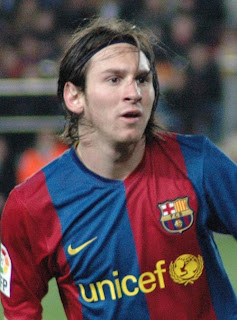
90's Dance/Pop group Aqua are back! Yes believe it or not the "Barbie Girl" hit makers have released a new single titled "How R U Doing?".
download here:
http://www14.zippyshare.com/v/35230319/file.html
 The Nissan GT-R has been rated the coolest trend car of today!!

The Biowashball is a unique device that removes the need for using detergent for washing your clothes and linen! This means that you will not need to buy detergent powder or fabric softener. It also means that the water from your washing machine can be used to water your garden without any risk of polluting the ground water!! What is more, when using a Biowashball you will not need hot water because cold water is all that is needed.
Inside the plastic sphere the different types of ceramics consist of TM or Effective Micro organisms which are beneficial to nature. It is these micro organisms which naturally promotes the decomposing of organic material and therefore helps our soil to re-energize itself and at the same time help to clean our groundwater system from pollution.
The ceramics have the ability to break the water surface tension so that water which is the solvent (natural cleaning agent) penetrate easily in between the fibres of laundry and can be effective as the cleaning agent.
The ceramics emits negative ions into the water which attach to the dirt particles which is a positive ion. This then get washed out during the washing process of the washing machine. Therefore this water can be recycled and is beneficial to our gardens and soil.
Just as chemical surfactants found in detergents do, resulting in wetting of fabric fibres so that dirt can be removed.
Negative ions in the water attach to dirt particles (positive loaded) and make them easier to rinse out of the fabric.
After washing with the Biowashball clothes come out of the wash really clean with brighter colours, smelling fresh and detergent free, with no trace of artificial chemical perfumes.
The absence of chemical residues also means the Biowashball is hypoallergic and is registered as a medical product in Switzerland.
The Biowashball is safe to use in any washing machine, front loader or top loader. A Biowashball can be used for 3 years on the basis of one 4kg laundry load per day. Expressed another way, each Biowashball will work effectively for about 1000 loads of washing.
For loads over 4kg, it is recommended that two Biowashballs should be used for best results.
Hmm.. Can’t think of one! Except they can fall apart if you use them in high temperature washes too often. A maximum of 80 degrees is recommended by one manufacturer.
I don't use them with very low temperature washes (15 degrees or below) as they sometimes don't clean quite so well with cool water - so perhaps they don't score so well in terms of carbon reduction. A 30 degree wash is generally OK for most items.

Apple unveiled the iPad 2 which is lighter and thinner than its predecessor,
iPad 2 features a new design that is 33 percent thinner and up to 15 percent lighter than the original iPad, while maintaining the same 9.7-inch LED-backlit LCD screen.
According to Apple the iPad 2 will deliver up to 10 hours of battery life, and will be available in black or white.
New features including faster Safari mobile browsing performance; iTunes Home Sharing; enhancements to AirPlay; the choice to use the iPad side switch to either lock the screen rotation or mute audio; and Personal Hotspot to share an iPhone 4 cellular data connection over Wi-Fi.
Additional iPad 2 features include a built-in gyro for gaming; HSUPA support for enhanced 3G upload speeds and HDMI Video Mirroring that lets users mirror their iPad screen on an HDTV using an optional adaptor.
iPad 2 with Wi-Fi will be available on March 11 for a suggested retail price of $499 (US) for the 16GB model, $599 (US) for the 32GB model, $699 (US) for the 64GB model.
iPad 2 will be available globally on March 25, but South Africa is not included in this release schedule. Apple added that “further international availability and pricing will be announced at a later date.”
http://mybroadband.co.za/news/hardware/18799-iPad-launched.html


• The weta is only found in New Zealand and is so old it has outlived the dinosaurs.
• Weta are large by insect standards. Some of the giant weta are enormous and are amongst the heaviest insects in the world.
• The weta is sometimes called the dinosaur of the insect world.
There are five different types of weta – tree weta, cave weta, giant weta, tusked weta and ground weta. All together there are over 100 different species of weta.